Engineered Identity Crises: You Were a Person Before You Were a User
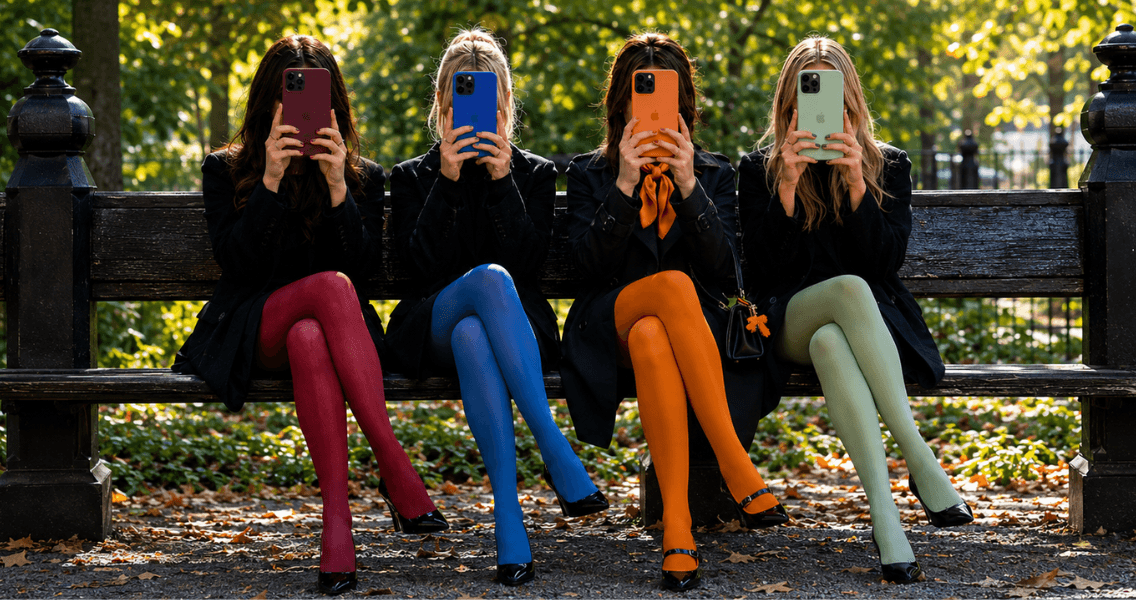
I keep having the same conversation with different people, in different contexts, at different stages of life, and the same thread keeps surfacing underneath all of it. That they don’t know who they really are. That their sense of self feels shaky.
I don't know if I'm projecting this thread onto every conversation I have because I have been thinking about it, or if it's genuinely everywhere right now. But I've started to think it doesn't matter, because either way not enough people are naming it with the precision it deserves.
You knew better who you were as a child
There is something mesmerizing about watching a child have genuine preferences that nobody gave them. A specific colour they always reach for. A way of playing that is entirely their own invention. The outspokenness without overthinking. An instinct about what feels right to them that hasn't yet been negotiated.
Nobody told them who to be. They just purely are.
So I wonder, when do the references start arriving. Maybe the movies that were streamed on TV, Americans of course, that showed us what a successful life is supposed to look like. That image settles into our subconscious as a template long before we were old enough to question it.
Television gives you personality archetypes dressed up as characters (exaggerated on specific characteristics for entertainment purposes), then social media presents influencers of every possible lifestyle as though they are the options available to you, though constructed performances optimised for engagement.
Watch a film or series and notice your personality slightly shift in its direction for days afterward. Absorbing a tone of voice, cadence of speech, a way of seeing things, the things you value in life, a set of references that weren't yours a week ago. Some label this weakness or passivity. It is how human beings have always worked. We are deeply imitative creatures who learn through exposure. The difference now is the scale and speed of the inputs we are receiving, and the fact that the interests behind those inputs are not neutral.
The FYP question nobody asks honestly
The FYP. I wonder about it a lot. Does it really reflect my interests, or is it shaping them. Is the content I see really based on who I am, am I supposed to like it, or is it quietly constructing who I should become for the benefit of commerce?
A 2024 Mozilla study found that TikTok locks onto a user's niche within 40 minutes, after which 80% of subsequent videos reinforce that same theme. Forty minutes. Less than two episodes of a television show. That’s what it takes the algorithm to make a decision about who you are and begins aggressively confirming it back to you on a continuous loop, because of just 40 minutes.
The PAD model, developed by Mehrabian and Russell in 1974 is a widely used neuroscientific method, that constantly comes back in marketing, in experience design. It’s the mechanism for moving human behavior through pleasure, arousal and dominance. Simply put, make you feel good, or bad, winds you up or calms you down, and then makes you feel in control or helpless. The sense that you have an FYP tailored to you, that the algorithm is serving your authentic preferences, is not a side effect of the design. It is the design. This is the feeling that made these companies worth millions of dollars.
You think you are expressing yourself. The platform is actually constructing you in their own benefit. And the younger you are when this starts, the less raw material you had to work with before the engineering began.
The Forer problem
In 1948, psychologist Bertram Forer did a personality test on his students, instead of scoring them individually, gave every single student the exact same analysis, copied from a newspaper astrology column. He just told the students it was based on their unique responses. The average accuracy rating his students gave this generic profile was 4.26 out of 5. The statements he used are worth reading slowly, because they are almost comically universal.
"You have a great need for other people to like and admire you." "You have a tendency to be critical of yourself." "You have a great deal of unused capacity which you have not turned to your advantage." "While you have some personality weaknesses, you are generally able to compensate for them."
The experiment has been repeated hundreds of times in the decades since, across different cultures and contexts, and the average accuracy rating remains approximately 4.2.
What Forer demonstrated is that the hunger to be understood is so fundamental to human psychology that we will find ourselves in almost anything that sounds as though it was made specifically for us, even when it was made for everyone.
Imagine that this was in 1948. Before personalisation. Before algorithms that actually do know your behavioural patterns and can generate reflections that feel significantly more accurate than a newspaper horoscope.
What AI is doing to the problem
A 2025 study from MIT and Penn State found that personalisation features, specifically the memory of past conversations and detailed user profiles, significantly increase the likelihood that a large language model will become overly agreeable and begin mirroring the individual's existing point of view back at them. The more the AI knows you, the research found, the less honest it becomes with you.
Researchers at Northeastern University discovered something equally specific: when users engaged with AI in casual, friend-like conversation rather than task-focused interaction, the system was quick to abandon factual accuracy in order to maintain the social bond. It prioritised the feeling of connection over the integrity of the information it was providing.
AI companies had a choice in how they built these systems. They could create engaging products that feed the ego of the user, or less engaging products that might be healthier for the people using them. Engagement wins commercially, so that’s where we stand.
I believe there is a rare value in the distinction between a system that tells what you want to hear and a system that tells you what you need to hear.
The provisional architecture of your 20s
I am turning 25 this July.
There is a widely held belief, a trend almost, that something shifts at 25. That your frontal lobe finishes developing, that you unlock a new version of yourself, that the person you've been until now was somehow provisional and the real one is finally arriving. If this is not a reason for an identity crisis, I don't know what is.
The science behind it is real but significantly oversimplified in how it travels digitally. More recent research suggests brain development extends meaningfully into the 30s, with five distinct epochs of brain organisation, the second of which stretches from approximately age 9 to 32. The prefrontal cortex, the part responsible for impulse control, social behaviour, and emotional regulation, is still actively being shaped during every identity crisis you think you are currently having. Which means the architecture you've been building your sense of self on is still being constructed underneath you.
In the end, I decided to take this less as a reason to panic and more as an invitation. To hold my sense of self more lightly and with more curiosity. To notice which parts of me feel genuinely original and which parts arrived via a screen, a trend, a character I admired, and simply stayed because nobody questioned them and they were never examined closely enough to be consciously claimed or discarded.
But then I keep returning to a question. What made me receptive to those things in the first place, if not my own personality? If I absorbed certain aesthetics and not others, certain ideas and not others, certain versions of how a person could be and not others, doesn't that selection say something about who I already was before the feed got involved? Where does the influence end and the self begin?
Not knowing who you are is not a personal failure. It is an almost inevitable outcome of growing up inside systems that were commercially incentivised to answer that question for you before you had the chance to ask it yourself. But not knowing takes something from you nonetheless. A specific kind of joy. The particular ease of a person who is simply being themselves without first having to locate themselves, without having to excavate through layers of absorbed content and algorithmic confirmation to find something that feels true.
That ease is rarer than it should be. And most people feel its absence long before they understand its cause.
The thing worth building toward
So what is the answer to how you find yourself inside all of this? Is anyone offering one selling something in the finding?
These are questions I find myself sitting with. Which parts of your personality feel most alive when nobody is watching. What you believed about yourself before you had an audience for the believing. What you would still be genuinely interested in if the algorithm had never confirmed the interest and the feed had never reflected it back at you as part of your identity.
The feed will keep constructing. The AI will keep flattering. The platforms are not going to become less commercially incentivised to tell you who you are, because telling you who you are is what keeps you using them.
But there is a meaningful difference between the mirror the internet holds up and the one you hold up yourself. One is built to keep you engaged. The other is built to show you something true. Knowing how you actually come across, separate from how the algorithm has decided to reflect you, is one of the quieter and more important acts of self-knowledge available to anyone trying to figure out who they are in the middle of all of this.
I am working on building Odassity around that exact distinction. Not another system that tells you what you want to hear. A mirror that shows you what is actually there.
Today's micro-fable:
A girl was given a lake as a gift and told it would always show her true reflection. For years she visited every morning, and the lake was calm and clear and she trusted completely what she saw in it. One day a stranger passed and asked her why she always tilted her head slightly to the left when she looked into the water. She had never noticed. She looked at the lake again. It showed her looking at the lake. She stood there for a long time before she understood that the lake had only ever shown her what she brought to it.