Everyone's Main Character Era Is Actually Everyone's Supporting Cast
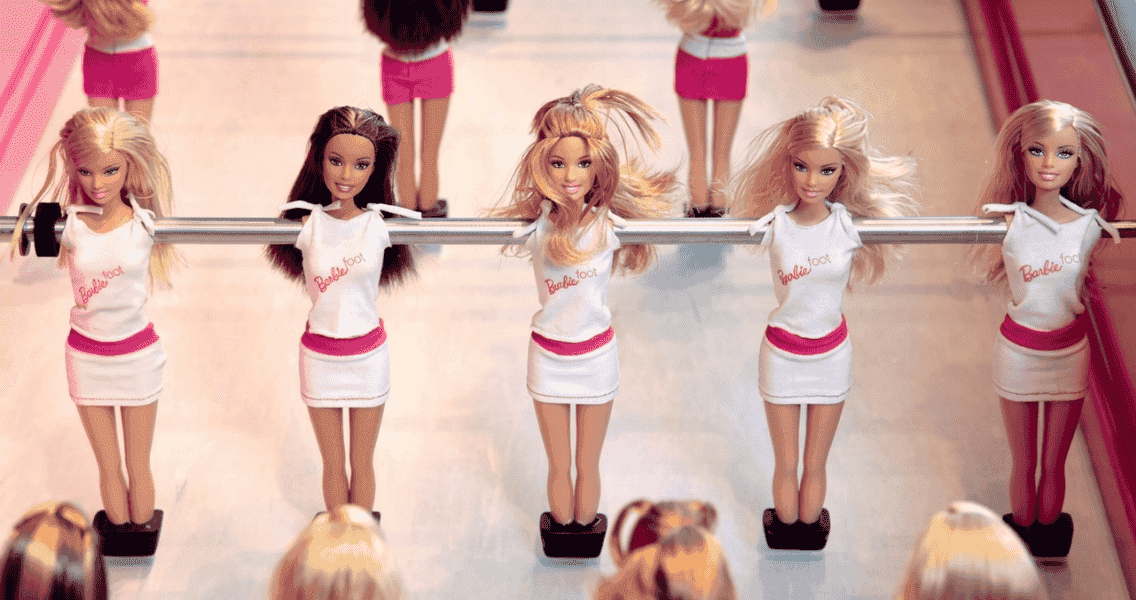
Scroll through any feed for five minutes and something starts to feel slightly off. Not wrong exactly. Just repetitive in a way that's hard to pin down. The aesthetics are different, the niches are different, the faces are different. But underneath all of it there's a sameness. A shared grammar. Everyone is lit the same way, paced the same way, positioned the same way. Everyone is the hero of their own carefully framed story.
This is what main character culture actually looks like at scale. Not a collection of individuals. A genre.
How it started
Main character energy began as something genuine. The idea that you are allowed to centre your own life, to take up space, to stop shrinking yourself for other people's comfort. That's a real and useful reframe. For people who had spent years making themselves smaller, it was actually liberating.
Then the algorithm got hold of it.
Platforms discovered that main character content performed well. The confident walk through a crowded street. The aesthetic morning routine. The camera held at the exact angle that says I know you're watching and I don't care that I know. Engagement went up. The format got replicated. Then replicated again. Then replicated by people replicating the people who replicated it until the original impulse, genuine self-possession, had been replaced entirely by its own aesthetic.
The performance of not performing. Optimised and distributed at scale.
The paradox nobody talks about
Here is the mechanical problem with everyone being the main character simultaneously. In any actual story, the main character is defined by contrast. They stand out because everyone else is background. The protagonist exists in relation to the supporting cast.
When the supporting cast all decide they're the protagonist too, the whole structure collapses. There's no foreground anymore because everyone is in it. No contrast because everyone is doing the same thing. The feeds become a crowd of people all walking toward the camera in slow motion, each one convinced they're the shot, none of them aware they're in the same crowd scene.
The attempt to stand out becomes the thing that makes you invisible.
What the algorithm did to individuality
Personal branding advice has been telling people for years to find their niche, develop their voice, show up consistently, be recognisably themselves. The advice is not wrong exactly. But applied at scale it produces something its authors didn't intend.
When everyone follows the same framework for being individual, individuality becomes a format. The authentic personal brand starts to look like every other authentic personal brand. The raw unfiltered content starts to look like every other raw unfiltered content. The specific niche turns out to be occupied by thousands of other people who found their specific niche in exactly the same way.
The algorithm rewards consistency and pattern recognition. So people become consistent and pattern-recognisable. Then they wonder why they feel interchangeable.
What actually makes someone a main character
The people who genuinely hold attention, who feel distinct, who you actually remember after closing the app, almost never describe themselves as main characters. They're usually just people who are interested in something specific enough and honest enough about it that the interest itself becomes the presence.
They're not performing centrality. They're not walking toward the camera. They're usually looking at something else entirely, something they actually find fascinating, and the camera happens to follow.
That quality cannot be replicated through a content strategy because it's not a content strategy. It's just genuine absorption in something real. Which is, ironically, the thing main character culture was supposed to celebrate before it became a template.
The protagonist of any interesting story is never thinking about being the protagonist. They're too busy with the actual story.
Sunday afternoon micro-fable:
A kingdom held a festival to celebrate its most extraordinary citizens. Every person who arrived had prepared something remarkable about themselves to share. The line stretched beyond the horizon. By the third day the judges had stopped listening. By the fifth day the citizens had stopped talking to each other. By the seventh day everyone agreed it had been a wonderful festival. Nobody could remember a single person they had met.