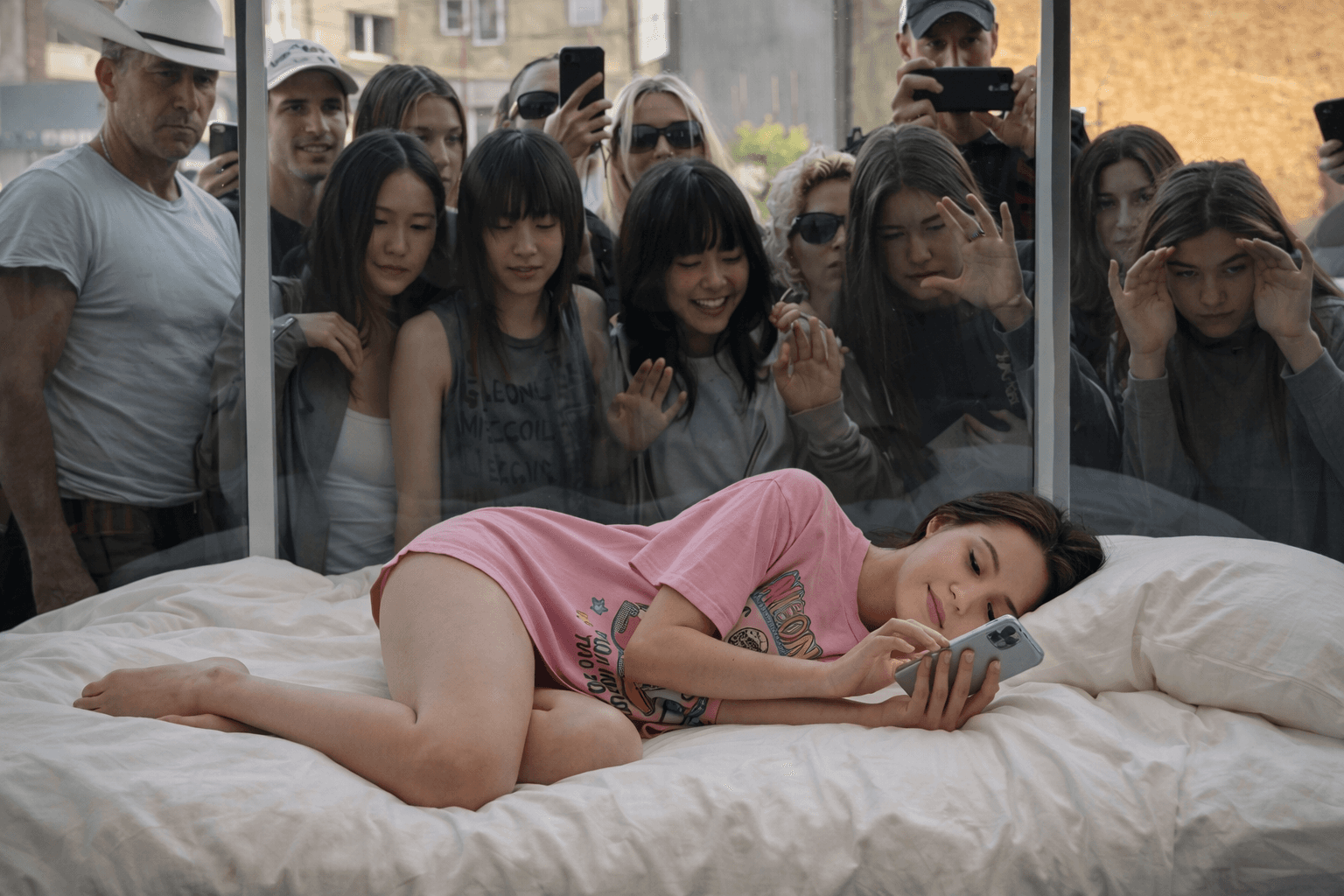
Overthinking Visibility: When Posting Becomes Performance

You had something to say. A real thought, a sharp observation, something that felt worth putting out there. You opened the draft. You started writing.
And then, somewhere in the second paragraph, a face appeared in your head.
Maybe it was your manager. A ex. Someone you're trying to impress. Someone you're trying not to impress. A person whose opinion you've already decided matters too much. Whoever it was, the moment they showed up, the writing changed. The sentence you just typed suddenly sounded wrong. Too much. Too confident. Too try-hard. Too vulnerable. You read it back through their eyes and it didn't survive.
So you rewrote it. And then rewrote it again. And at some point the original thought, the one that felt worth saying, got edited into something so safe it wasn't really anything anymore. Or you just closed the tab.
The audience you invent is scarier than the one that exists
Here's what's strange about this. The real audience, the people who will actually read your post, are mostly distracted, mostly kind, and mostly thinking about themselves. They will spend four seconds on your words and move on. They are not building a case against you.
But the imaginary audience in your head? That person is paying close attention. They're looking for reasons to judge. They remember everything you've ever posted and they're holding it all against this new thing you're about to say. They have very high standards and very little grace.
You are not writing for your followers. You are writing for this one invented person who doesn't exist, and they are making you worse at this.
The specific person problem
There's a particular version of this that almost nobody talks about honestly. It's not abstract audience anxiety. It's one face. A specific someone whose imagined reaction has somehow become the filter everything passes through before it's allowed to exist.
When that person is in your head while you write, you're not really writing anymore. You're negotiating. Every word choice is a small decision about how you want to appear to them specifically. The post stops being communication and becomes a performance staged for an audience of one who isn't even watching.
The content that comes out of this process is almost always flatter than what you started with. Safer. More hedged. The edges filed down. It might even get good engagement because it's inoffensive enough for everyone. But it won't be the thing you actually wanted to say.
What posts look like when nobody's watching
Think about the last time you sent a voice note to a close friend explaining something you'd been thinking about. Or a long message at midnight when you were too tired to be careful. That version of your thinking, unguarded, unperformed, is almost always sharper than the polished post you spent forty minutes second-guessing.
The difference isn't quality. It's audience. In the voice note there was no face to write toward. You were just thinking out loud.
The posts that actually land, the ones that feel like they were written by a real person, usually have that same texture. Like the writer wasn't performing visibility. Like they wrote it and posted it before the imaginary audience had time to show up.
The draft you never posted
Most people have a graveyard of these. Thoughts that were real, observations that were sharp, things that would have connected with someone if they'd made it out. They didn't because somewhere in the process of imagining who might read them, they became impossible to finish.
The thought that scares you a little to post is usually the one worth posting. Not because bravery is a virtue, but because the fear is a signal. It means the idea has an edge. And edges are the only thing anyone actually remembers.
Sunday afternoon micro-fable:
A girl wrote a letter every night before bed. She never sent them. They were the most honest things she had ever written. When she died, her daughter found the box and read every one. "She sounds so free here," the daughter said. Nobody knew who she meant.