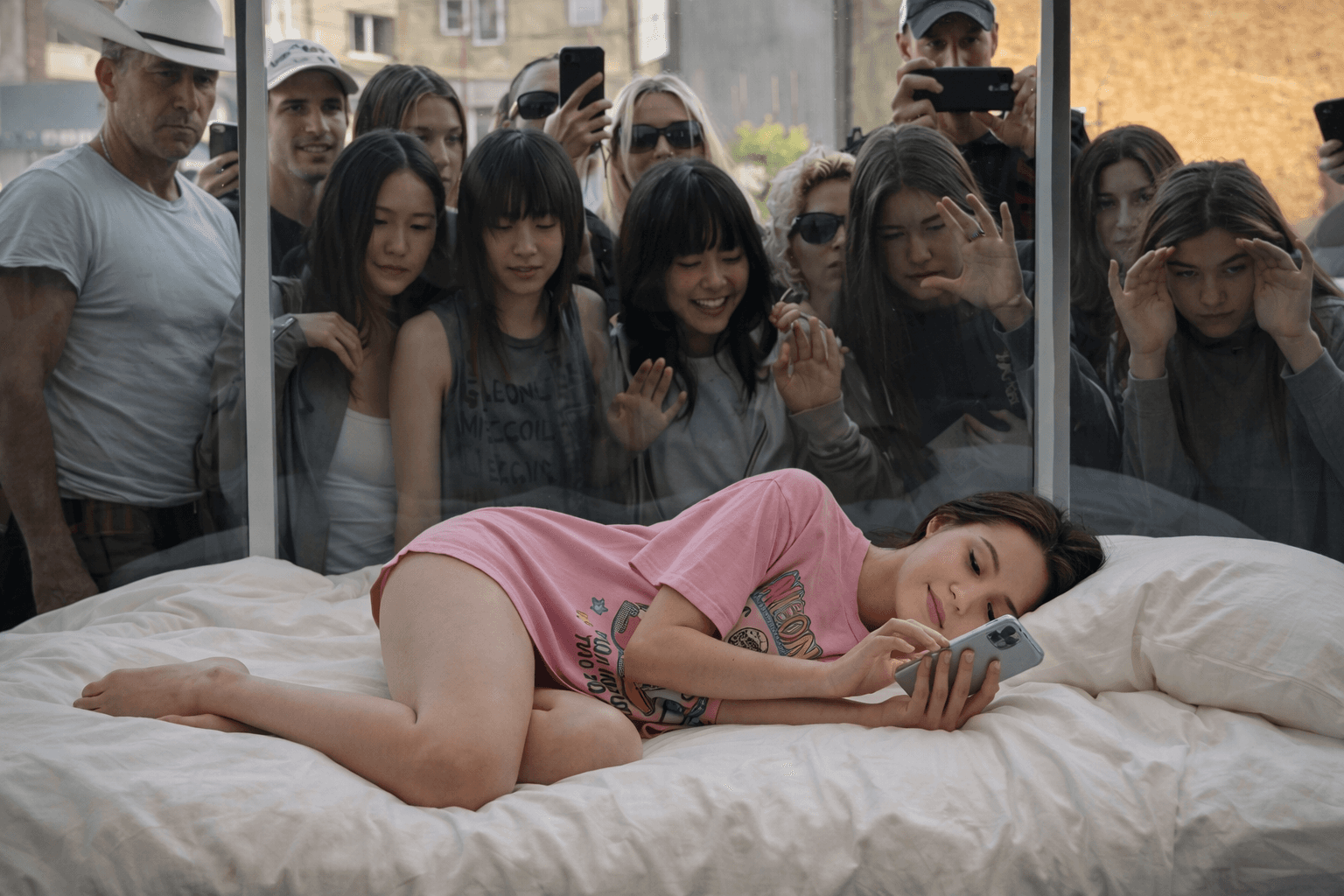
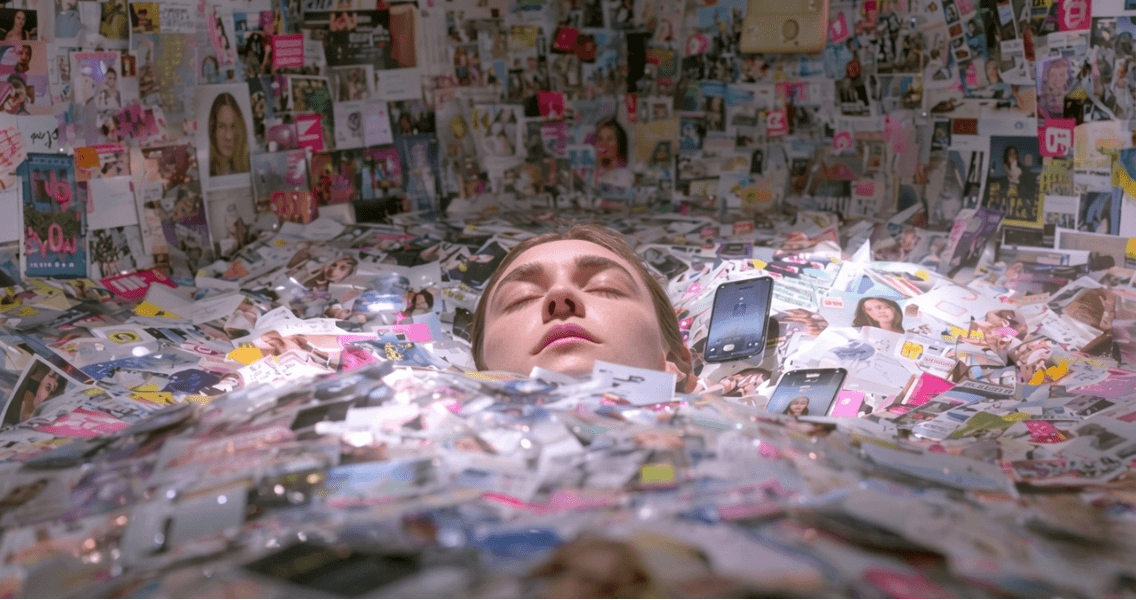
The Extinction of Trying: When Everyone's a Natural
I keep seeing this kind of content that has taken over every platform's algorithm. The girl who woke up like this. The founder who built a company between yoga sessions. The creative whose work just flows. The person who learned a language, an instrument, a skill, and makes it look like breathing.
Nobody shows the part before. Nobody shows the three years of bad attempts, the frustration, the wanting to quit, the slow unglamorous accumulation of competence. That part doesn't exist on the internet. Or if it does, it's been repackaged into a redemption arc with a tidy ending and a lesson for the caption.
What's left is a feed full of naturals. And a culture that has quietly decided that looking like you tried is worse than failing.
The effortless aesthetic and what it actually costs
The "effortless" trend has been building for years but it reached a particular peak recently. Clean girl. Quiet luxury. Undone hair that took forty minutes. The aesthetic of someone who simply is, rather than someone who works at it.
This isn't new as a concept. Sprezzatura, the Italian Renaissance idea of performing grace while concealing effort, has been a social ideal for centuries. But the internet scaled it. What used to be a subtle social performance among a small elite became the baseline expectation for anyone with a following. Everyone is supposed to look like it comes naturally. The effort is the thing you hide.
The cost of this is not just aesthetic. It's psychological. When the entire visible landscape is populated by people for whom things appear effortless, your own effort starts to feel like evidence of inadequacy. You're not a natural. You have to work at it. Which must mean something is wrong with you.
The effortless aesthetic doesn't just raise the bar. It moves it somewhere invisible so you can never tell if you've cleared it.
What we actually know about skill
Here's the thing that gets lost in the effortless narrative. Nobody is a natural. Not really.
Psychologist Anders Ericsson spent decades studying world-class performers across every field, musicians, athletes, chess players, surgeons, and found no evidence that innate talent alone explains exceptional performance. What he found instead was deliberate practice. Thousands of hours of focused, effortful, often frustrating work that looked, from the outside, like nothing at all by the time it was finished.
The naturals are people who started earlier, practiced more deliberately, and then got very good at making it look like they didn't. The effortlessness is the final product of enormous effort. It's not the absence of trying. It's what trying looks like after a very long time.
Malcolm Gladwell's 10,000 hours framing was imprecise but the core observation was right. The people who seem most naturally gifted are usually the people who accumulated the most invisible hours. The invisibility is part of the performance. And the internet has made that performance mandatory.
The thing that's actually happening to people
When effort becomes shameful, a very specific thing happens. People stop starting.
Not because they don't want to. Because the gap between where they are and where the naturals appear to be looks insurmountable. If that person just woke up able to do that, and I'm struggling after six months, maybe I'm just not built for it. Maybe it's not for me. Maybe I should stop before someone notices how hard I'm trying.
This is the silence the effortless aesthetic creates. Not just in what people post. In what they attempt. The things people don't begin because the visible landscape gave them no evidence that beginning is supposed to be hard.
A 2022 study in the Journal of Experimental Psychology found that people consistently underestimate how much effort goes into others' successes and overestimate natural ability as an explanatory factor. In other words, we are systematically bad at seeing effort even when it's there. And the effortless aesthetic is specifically designed to exploit that blind spot.
The most vulnerable thing you can say online right now
Failure content is everywhere. The "I lost everything" post. The pivot story. The public breakdown followed by the comeback. Vulnerability has been so thoroughly monetised that admitting failure has become its own kind of performance. It's safe. It has a format. People know how to respond to it.
But admitting you worked hard at something, really worked, for a long time, without it coming naturally, without a dramatic failure arc, just steady unglamorous effort, that doesn't have a format. It doesn't perform well. It makes people slightly uncomfortable in a way they can't quite name.
Because it implies they might have to do the same.
Saying "I failed and got back up" is a story with a hero. Saying "I tried really hard for two years and I'm still not that good but I'm better" is just the truth. And the truth, apparently, doesn't convert.
What this means for you specifically
Think about the last thing you got good at. The actual process of it. The early attempts you wouldn't show anyone. The specific moment you considered stopping. The slow accumulation of slightly less bad until one day it became something resembling competence.
Now think about how you talk about that thing publicly. Do you mention the two years. Do you show the early attempts. Or do you present the current version as though it arrived without the mess that preceded it.
Most people perform the natural. Not because they're dishonest. Because the internet trained them that the effort is the embarrassing part. The part to edit out. The part that makes you look like you wanted it too visibly.
But wanting something visibly, working for it openly, being seen in the unglamorous middle of getting somewhere, is actually the most honest thing you can do online right now. It's also, quietly, the rarest.
Today's micro-fable:
A young musician played in the town square every evening for seven years. Nobody stopped to listen. On the eighth year something shifted. The notes started doing something they hadn't done before. People gathered. They called her a natural. She smiled and said nothing. She had learned that the truth about how things are made is rarely what people want to hear.