The Brands That Stay With Me Are The Ones I Keep Running Into In Real Life
I didn’t really notice it at first.
It was just normal conversations. Someone asking if I go to Skatecafe on weekends. Someone else telling me I’m missing out if I haven’t tried the matcha at Lera. A friend asking if a restaurant I mentioned is on Formitable, like that’s just something I should already know.
None of it felt important.
But the same names kept coming up. Different people, different moments, same references. No one explaining them, no one trying to sell anything. They just kept being part of the conversation.
And at some point I realized I already had a sense of them.
Not because I had looked them up or because I had seen a campaign. Just because I’d heard about them enough times, in real life, that they didn’t feel new anymore.
That’s what this piece is about.
Not visibility, not reach, not how often a brand shows up in your feed. But how brands actually become familiar. How they move from something you’ve seen once to something that feels like it’s already part of your world.
Because those are usually not the same thing.
Visibility kept growing. Memory didn’t
Most marketing teams are still structured around the same logic: produce more, distribute more, reach more.
And on paper, that still works. You can scale impressions, drive traffic, and report on performance week over week. The dashboards look healthy. The activity is visible. There’s always something going out.
What’s harder to show is whether any of that translates into someone actually thinking about your brand later, without being prompted. That’s where things start to break.
You can hit someone multiple times in a week with your content and still not exist in their decision-making moment. They’ve seen you, maybe even engaged, but there’s no mental shortcut that brings you back when it matters.
That’s not a copy issue or a creative issue. It’s about where and how the interaction happens.
Digital environments are optimized for speed. People consume quickly, move on quickly, and rarely attach what they see to a specific moment or context. Your brand becomes one of many inputs in a continuous stream.
Compare that to a situation where your brand shows up in a physical or routine-based setting.
Someone grabs coffee from the same place twice a week.
They see your product on the same table across from them.
A friend mentions you in a conversation tied to that exact setting.
Now your brand is anchored to something.
That’s what drives recall. People consistently remember brands more when they’ve experienced them in a real environment rather than just seeing them through standard media. From a practical standpoint, this shifts what you prioritize.
Instead of asking how many people saw your brand, you start asking:
where did they encounter it
how many times did they encounter it in the same context
what situation will make them remember you later
Because once your brand is tied to a specific moment or routine, you don’t need to keep reintroducing yourself.
Community is starting to behave like distribution
The kind of reach that actually works right now is the one you barely notice.
It’s when something keeps popping up in your life until it just… feels familiar.
In Amsterdam, Breeze is a really good example of that. Breeze is a dating app, but it skips the whole texting phase. If you match, it just sets up a date for you. You pick a time, you show up, and that’s it.
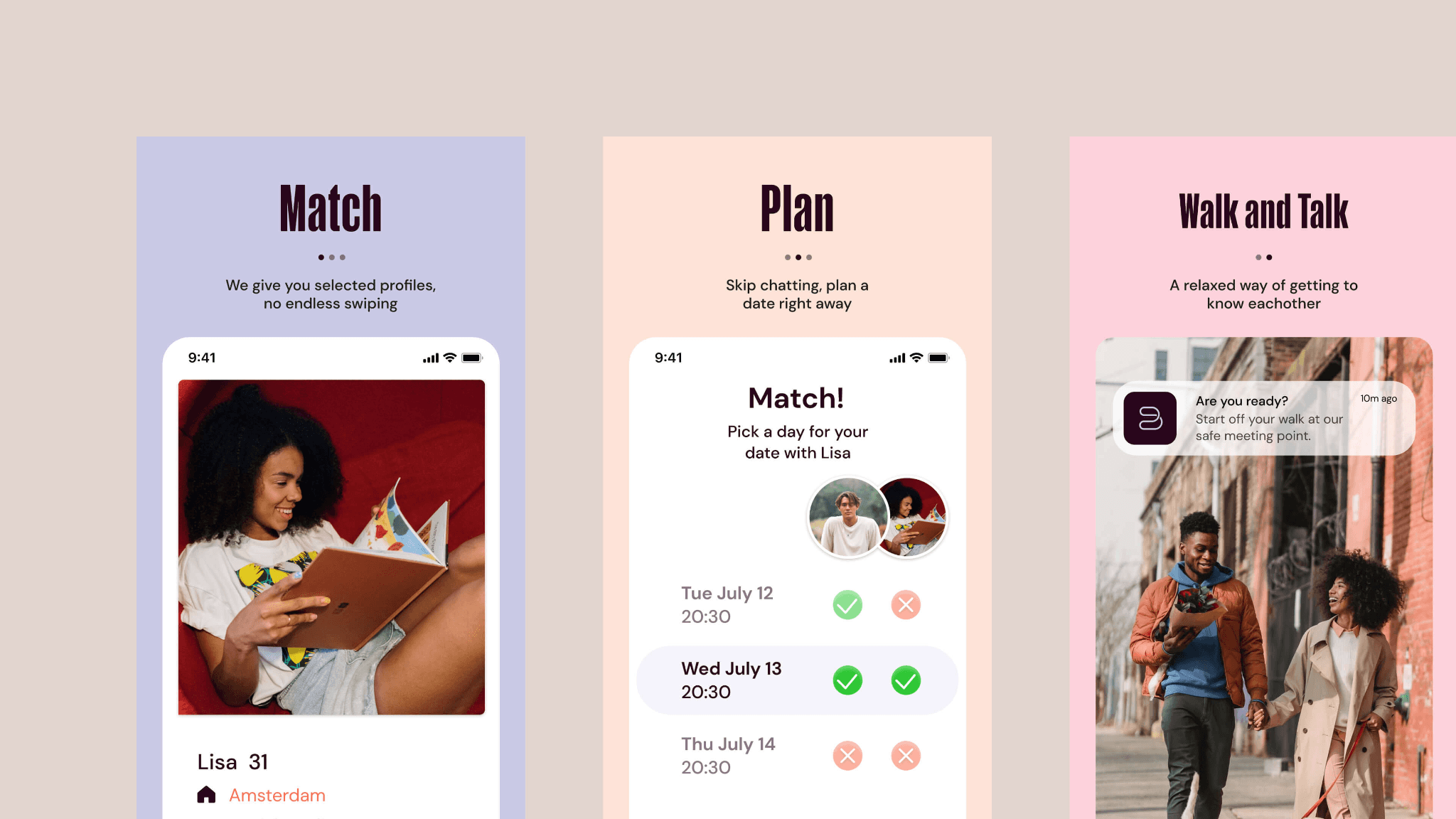
Because of that, people actually talk about it in real life.
You’ll hear someone say they went on a Breeze date. Then a few days later, someone else mentions it. Then it comes up again, casually, in a completely different conversation.
No one is trying to convince you to download it (more likely, you’ll hear about some weird encounters). But hey, you’re looking for a dating app too, right?
And after a while, it doesn’t feel new anymore. It feels like something people around you already use.
That’s how it spreads. Not because you saw an ad, but because you’ve heard about it enough times from people you know that it just makes sense.
GoodNews Coffee and the power of repeated context
GoodNews Coffee is yet another good example of this, and once you properly clock it, you kind of can’t unsee it anymore.
The concept itself is very straightforward. Small coffee spots, placed exactly where people are already moving, with a really recognizable visual identity (the kind where you don’t even have to read the name, you just know it’s them).
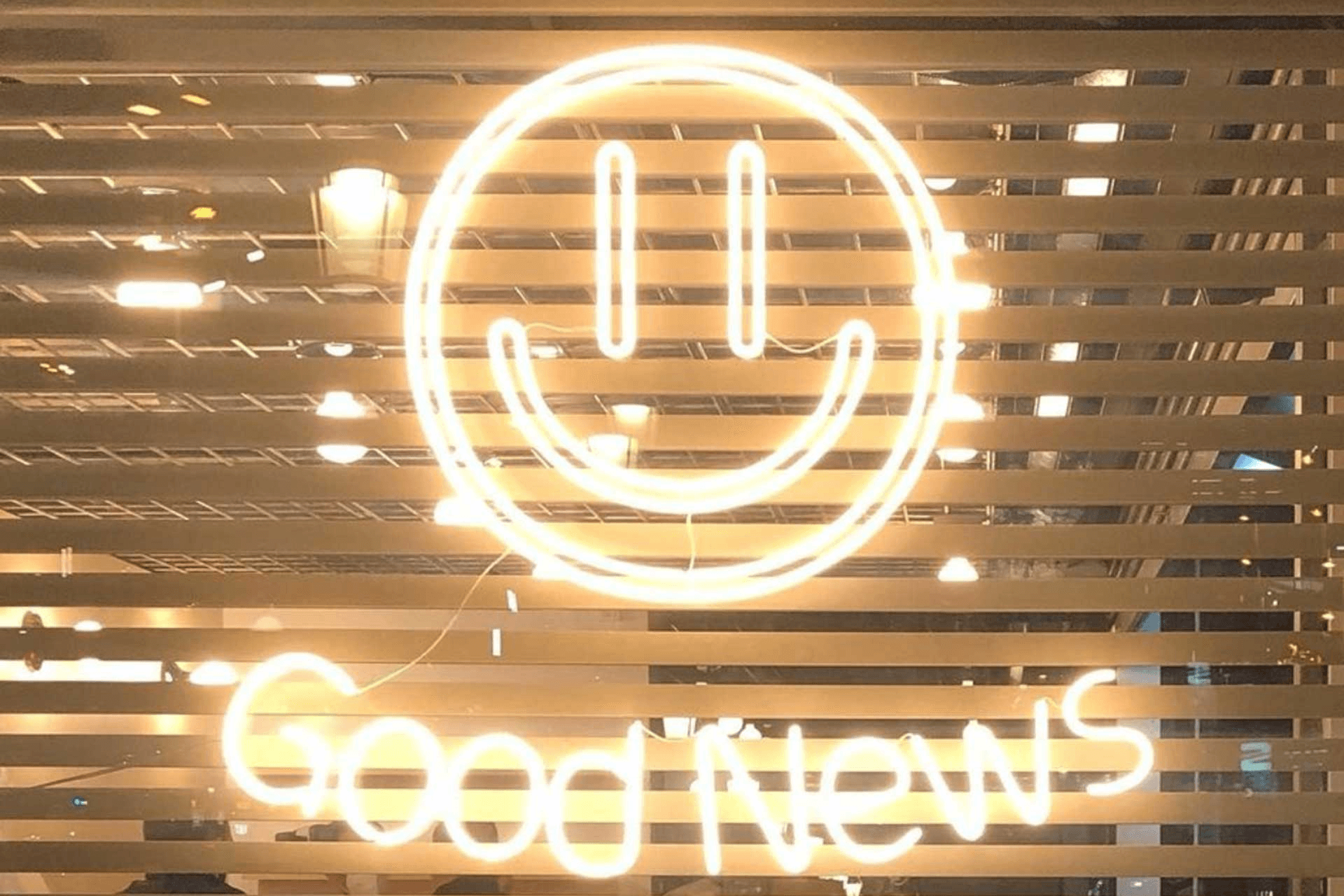
But the interesting part is how you become aware of it. It’s not like you suddenly “discover” it and think wow, new brand. It’s much more subtle than that.
You just… keep running into it. Maybe you first notice it in Barcelona without thinking too much of it. Then a few weeks later, you see it again in Amsterdam and it feels vaguely familiar, but you can’t really place why. Then you’re in Paris and it’s there again, same look, same feeling, same kind of spot.
The first time I saw the brand personally, I didn’t register it. The second time, I thought it looked familiar. By the third city, it felt like I already knew it.
And at some point, my brain just connects the dots.
I started recognizing the brand. Not in a conscious, “I’ve been targeted by this company” kind of way, but more like a quiet realization that this thing has been around me for a while now. Like it’s been sitting in my peripheral vision long enough that it finally moves into focus.
(And I don’t even remember when that switch happened.)
That’s what repeated context does. It builds familiarity without asking for attention. It doesn’t rely on one strong impression, but on a series of small, almost forgettable ones that stack over time until they’re not forgettable anymore.
Repetition in one place beats presence everywhere
A lot of digital strategies still follow the same logic. Show up on more platforms, post more often, try more formats, increase touchpoints, stay visible at all times.
And yes, that does get you seen.
But being seen once, or even a few times across different places, doesn’t really build anything solid anymore. It just adds to the noise people are already used to filtering out.
What seems to work much better right now is something way less obvious. It’s not about being everywhere, it’s about showing up repeatedly in the same kind of context until people stop experiencing you as something new.
Because that’s what actually creates a mental shortcut: when someone keeps running into your brand in a similar setting, something shifts. They don’t need to actively process it anymore. It starts to feel familiar in a way that’s hard to explain, but very easy to act on.
You begin to associate the brand with something specific, even if you never consciously decided to. A certain area you spend time in. A routine you come back to. A type of person you see around you.
And once that association is there, everything becomes much easier.
What this changes for marketing teams
Most marketing teams are still built around production. Content calendars, campaign cycles, launches, reporting. You plan, you publish, you measure, and then you do it again. It’s a system that made a lot of sense when distribution was the main problem.
But if you zoom out a bit, it starts to feel incomplete. Because brands don’t live in calendars, but in people’s lives.
And people don’t experience brands as isolated pieces of content. They experience them as part of environments, routines, and social settings. Things they come back to, places they recognize, names they hear more than once.
And here’s the gap: very few teams are actually thinking about where their brand sits in someone’s day-to-day life. Not in an abstract “customer journey” way, but in a very literal sense.
Where would someone run into this brand without looking for it?
In what kind of setting would it feel natural?
Who else is present in that environment?
What does it say about someone to be associated with it?
Those questions are less about marketing and more about observation. They require paying attention to how people move, who they spend time with, what they repeat, what they casually mention. It’s closer to anthropology than performance marketing.
Where this is heading
I spend most of my time inside marketing systems.
Dashboards, campaigns, performance loops. Planning what goes out, tracking what lands, trying to make sense of what works.
It’s very easy to start believing that visibility is the same thing as impact.
If people are seeing it, engaging with it, clicking on it, then it must be working.
But lately, I’m not so sure. The brands that stay with me aren’t the ones I see the most online. They’re not the ones following me around from platform to platform.
They’re the ones I keep running into. Same kind of place. Same kind of context. Just often enough that they stop feeling new. They become part of something I already do, instead of something I’m being shown.
And that changes the dynamic completely.
Because once a brand feels familiar in that way, you don’t really question it. You don’t need to look it up again. You don’t compare it as much. It’s already there, sitting somewhere in your head, tied to a moment or a place.
That’s much harder to build. And much easier to overlook if you’re only measuring what happens online.
It’s also harder to scale, which is probably why it gets ignored. But it feels a lot closer to how people actually move through the world.
And I think more of marketing is going to have to catch up with that.